The Heart as Muscle and Metaphor
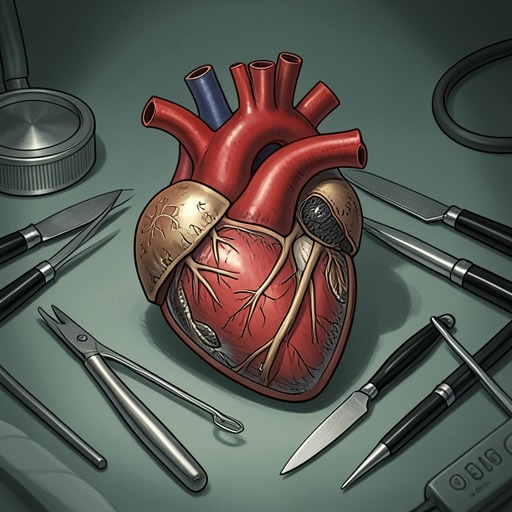
East of the MountainsThe heart in the novel is both a physical organ and a contested symbol: Ben Givens knows it as a muscle that pumps blood, while other people place love, grief, beauty, and divine presence within it. His experience as a physician lets him act on the heart as matter, but it does not settle what survival means or make love immune to loss. The result is a recurring tension between what medical knowledge can describe and what human beings hope the heart signifies.
The Heart as Medical Knowledge
Ben’s professional understanding begins with the heart as an organ whose work can be observed and treated. He has repaired a human heart in surgery, and he thinks in terms of function rather than mystery: a heart pumps blood, its structure is not beyond comprehension, and some parts, including a valve, can be replaced. This is not a rejection of love. It is the perspective of a physician who has handled the organ directly and learned to distinguish its physical operation from the meanings attached to it.
The distinction appears in the contrast between Ben’s medical identity and the emotional language through which people understand the body. For poets and priests, the heart can be the seat of beauty, the home of love, a host for God, or a chamber for sorrow and other feelings. Ben knows these associations, but his work has made the organ tangible to him first. The body is not an abstract emblem when a physician must treat it; it is a living system with material needs and limits.
That knowledge also has boundaries. When Ben is told that his mother’s pancreatic cancer cannot be cured, he protests that the doctor is a physician, as though medical skill ought to make a cure possible. Dr. Williams answers that a doctor is not a magician. The exchange establishes a limit that shadows Ben’s later reflections on the heart: trained hands can intervene, but they cannot guarantee restoration or undo every loss. In the family’s discussion of opium, the question is not how to cure the disease but how much pain the patient can bear and when enough is enough. Care therefore includes decisions that medical knowledge cannot make painless or certain.
Stackhouse’s Resuscitation
The novel gives the heart its most dramatic literal action in the wartime emergency involving Bill Stackhouse. A surgeon attempts to restart Stackhouse’s heart by compressing it directly, explaining the procedure to the people around him as a practical last resort rather than a supernatural act. The distinction matters: the surgeon presents the intervention as something learned and performed through technique, while the others confront the apparent return of a man who had been dead.
Stackhouse’s heart begins beating again, at first irregularly and then with a steadier rhythm. The surgeon continues working, giving instructions and organizing further treatment rather than treating the renewed pulse as the end of the emergency. Ben assists, and later gives blood that is used for Stackhouse. Survival is thus neither a solitary miracle nor the product of a single dramatic gesture. It comes through skilled intervention, sustained work, and the cooperation of several people under pressure.
Ben nevertheless calls the event a miracle. The word does not erase the surgeon’s explanation or the physical labor that preceded the recovery; it registers the force of witnessing a life return when death seemed to have arrived. The scene holds both accounts together. The surgeon describes what hands can do to a heart, while Ben’s response acknowledges that the successful outcome exceeds what technique alone can promise. The novel does not require either description to cancel the other.
Memory and the Meaning of Survival
Decades later, Ben remembers Stackhouse’s recovery in a motel room in Quincy, Washington. Stackhouse survived with a limp and a shoulder that hurt in cold weather, retired from a sales job in Bethlehem, Pennsylvania, and had eleven grandchildren. He had sent Ben photographs and letters over the years; the two men met three times at reunions of the 10th Mountain Division and spoke at length about what had happened. Stackhouse was writing his memoirs so that his descendants would know the story too.
These details give the resuscitation a life beyond the wartime scene. The revived heartbeat led not to an untouched body or an erased past, but to years of ordinary consequence: lingering physical effects, family, correspondence, reunions, and an effort to preserve memory in writing. The memoir project also makes survival transmissible. Stackhouse’s descendants may inherit an account of the event, even though they cannot inherit the experience itself.
For Ben, however, the remembered heart remains inseparable from a severe account of loss. He considers the heart as the center of love and sorrow, but also as a muscle, an organ that can be physically manipulated and partly repaired. From that material perspective comes his bleak thought that nothing tangible lasts. The phrase does not prove that he disbelieves in love; rather, he recognizes love while fearing that it, like every embodied life, is transitory. The heart’s two meanings remain in tension: the organ is present and measurable, but the emotional life associated with it cannot be secured by preserving the organ.
Care Beyond the Heart
Other medical episodes extend this tension between bodily knowledge and human care without making the heart their direct subject. After Rex is injured, Ben assists Dr. Peterson with the dog’s operation, helping with anesthesia and administering an antibiotic. He has not operated for nineteen months and feels a return of professional excitement, even though he had expected to die in the sage country. The scene shows that medical practice can reappear as action and responsibility before Ben has resolved his despair. A physician’s knowledge is not confined to the symbol of the human heart: it is also a readiness to help where skill is needed.
Later, faced with an ill fruit picker, Ben recognizes that he cannot diagnose or treat the man properly without equipment and directs that he be taken to a hospital. His judgment is explicit about its own limits. When Doris goes into obstructed labor, he has not attended a delivery since his obstetrics internship forty-four years earlier and first asks for an ambulance. As the birth becomes urgent, he acts on the knowledge he still has, and the baby survives. These episodes echo the earlier contrast between cure and care: expertise matters, but it is practiced amid uncertainty, imperfect resources, and decisions about what can be done now.
A Symbol That Does Not Resolve Grief
The heart’s symbolic force is strongest because the novel refuses to make it a simple answer. Ben can call Stackhouse’s recovery a miracle and still approach the organ as a physician, not a vessel whose workings he must leave unexplained. He can believe in love while seeing the heart as temporary matter. The same story that gives medical intervention a life-saving consequence also places illness, pain, and death beyond the reach of guaranteed cures.
That unresolved duality gives the heart its significance across the novel’s scenes of medicine and loss. It is a muscle that can beat again through practiced intervention, and a metaphor that gathers meanings no operation can preserve. The living body makes love possible, but it does not make love permanent. For Ben, understanding the heart anatomically removes innocence without extinguishing belief; the gap between physical fact and emotional meaning is not closed, but becomes the very place where grief, care, and the language of miracles meet.